
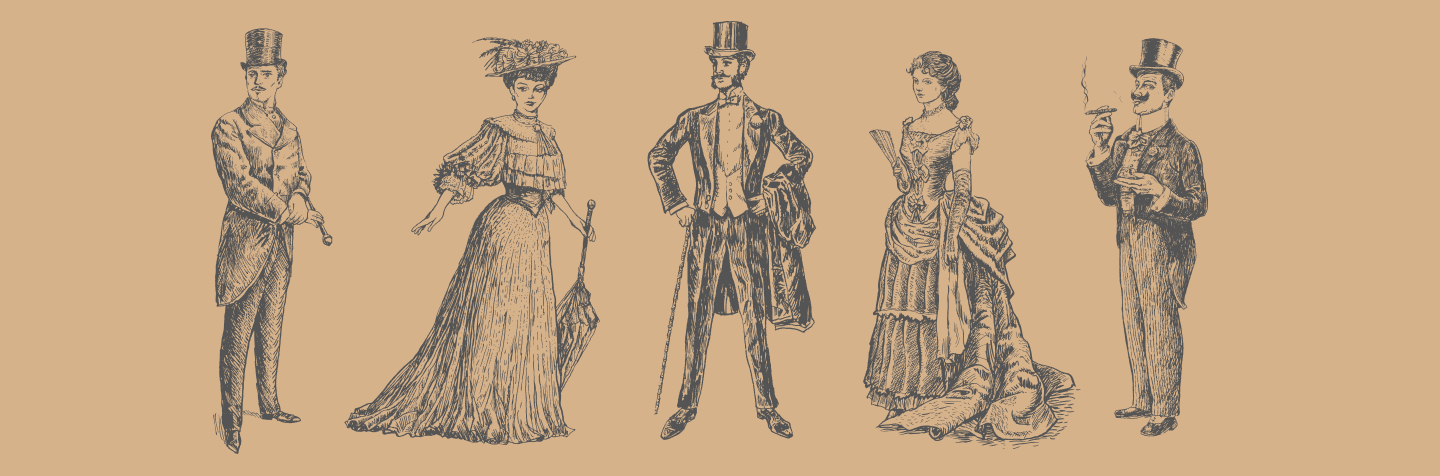
Fashion
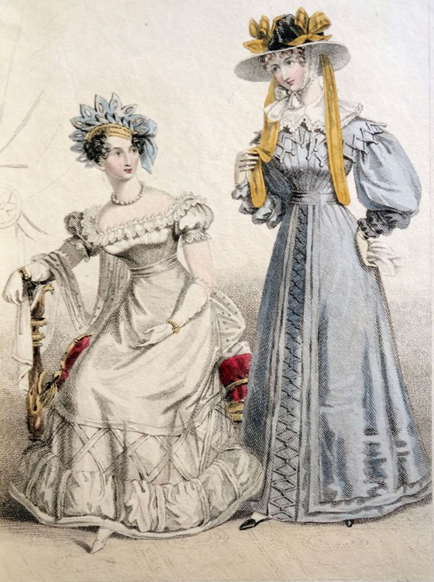
Towards the end of the Regency/Empire epoch, the high empire waistline of gowns began slipping downwards by about an inch every year.
During the Victorian era, it was a custom by those who could afford it to change one's dress several times a day, at least once in the late morning and once before dinner.
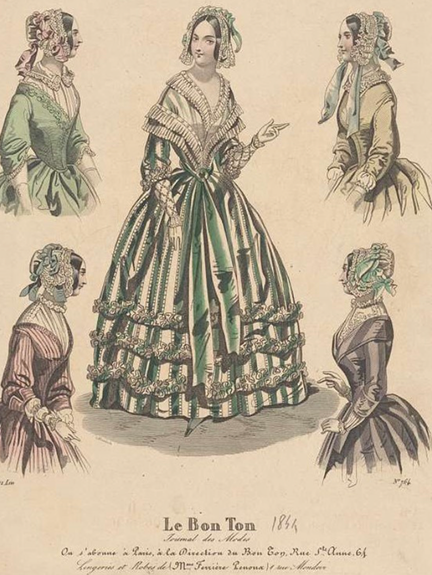
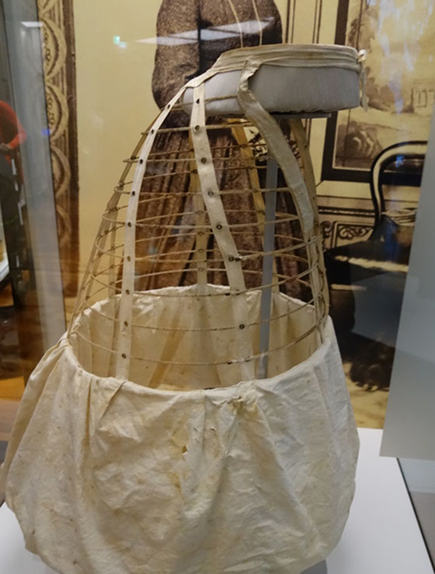
In the 1840s, the huge leg-o-mutton sleeves vanished to be supplanted by tight-fitting ones. The skirts became even wider, supported first by underskirts and then in the 1850s by the structured crinolines.
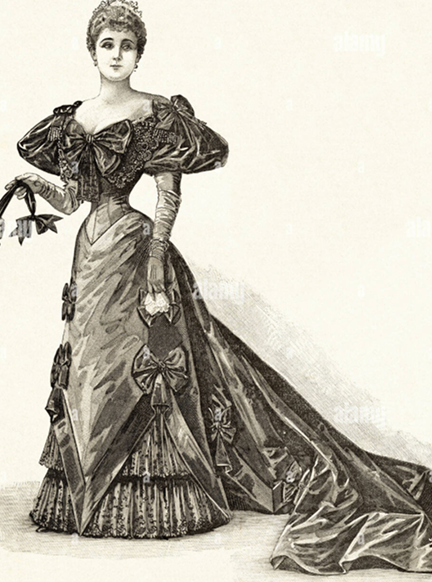
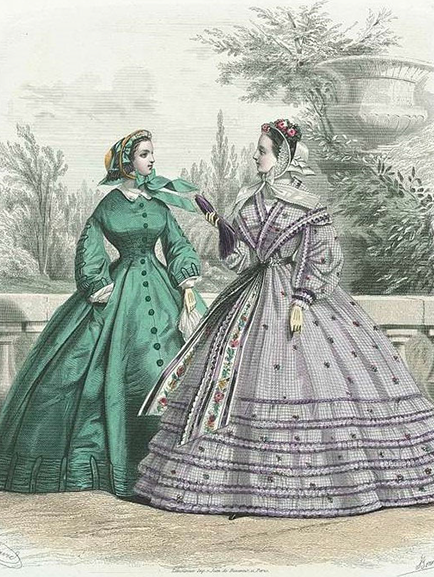
Evening gowns had a low, wide neckline and small close-fitting sleeves. Shiny, glimmering fabrics like silk and taffeta were the thing, just as lace in form of trimming along the neckline, as gloves and stoles.
The steel-hooped cage crinoline was patented in 1856 in Paris, popular due to being lightweight, collapsible and fairly easy to maneuver.
By the end of the 1860s, the crinoline had changed shape so drastically that it is being referred to by a separate term for what was practically a separate type of undergarment: the bustle.
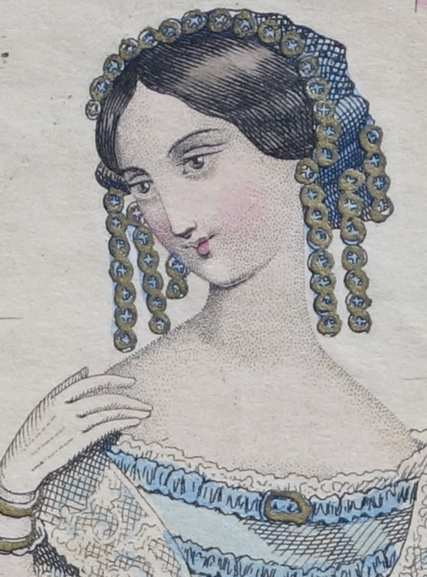
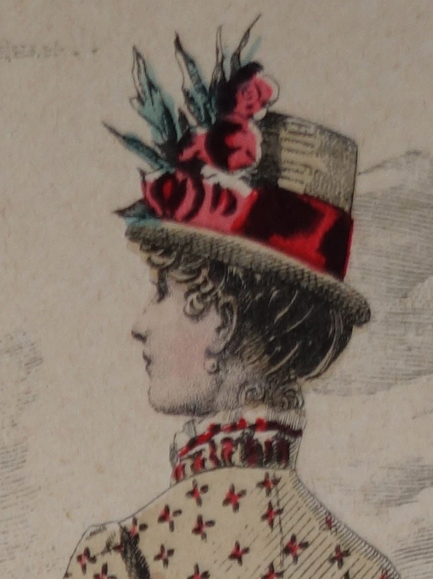
In the 1840s, the hair became much simpler. It was parted in the middle and swept back into a bun/up-do behind the head, thus framing the face
Folding fans, decorated with painted scenes were an important accessory. Smelling salts were sometimes carried in small scent bottles, as well as pocket watches and belt chatelaines with a thimble, small scissors, button hooks and trinkets all on little chains.
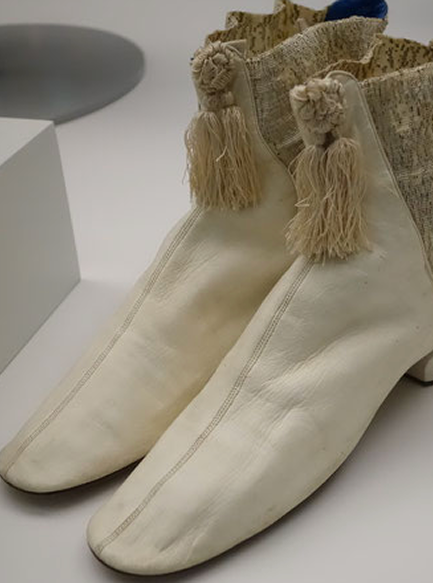
Flat shoes made of soft leather or fabric can be seen in portraits and fashion plates for much of the Victorian era. These flats could either be slipped on or tied with ribbon strapping.